By CAROL BAKER
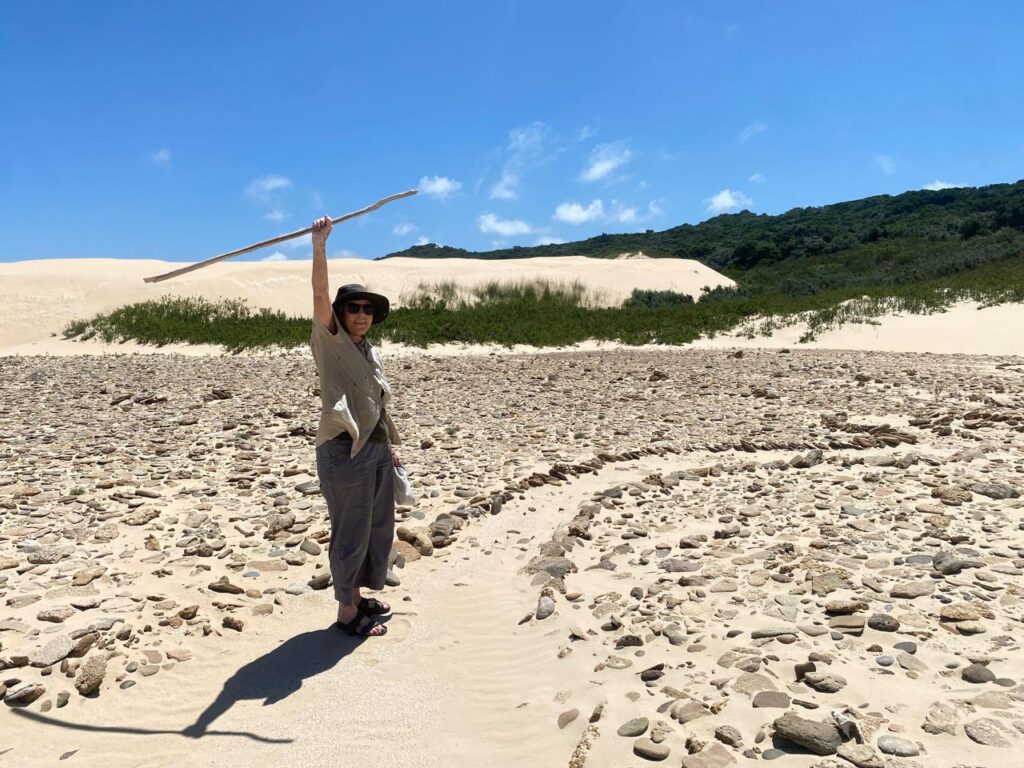
In 2001 we held an artists’ week-long workshop in Hamburg led by artist and teacher Gregory Kerr. The idea was to bring artists to experience the natural beauty and history of the village and also to bring selective visitors who would help improve the very poor economy of the village where most people did not have jobs and poverty and hopelessness were endemic.
Six artists attended the workshop and our first project was to construct an artwork on the sand pavements between the transverse dunes on Hamburg beach and then use these as a basis for the drawings and paintings we were to make during the rest of the workshop.
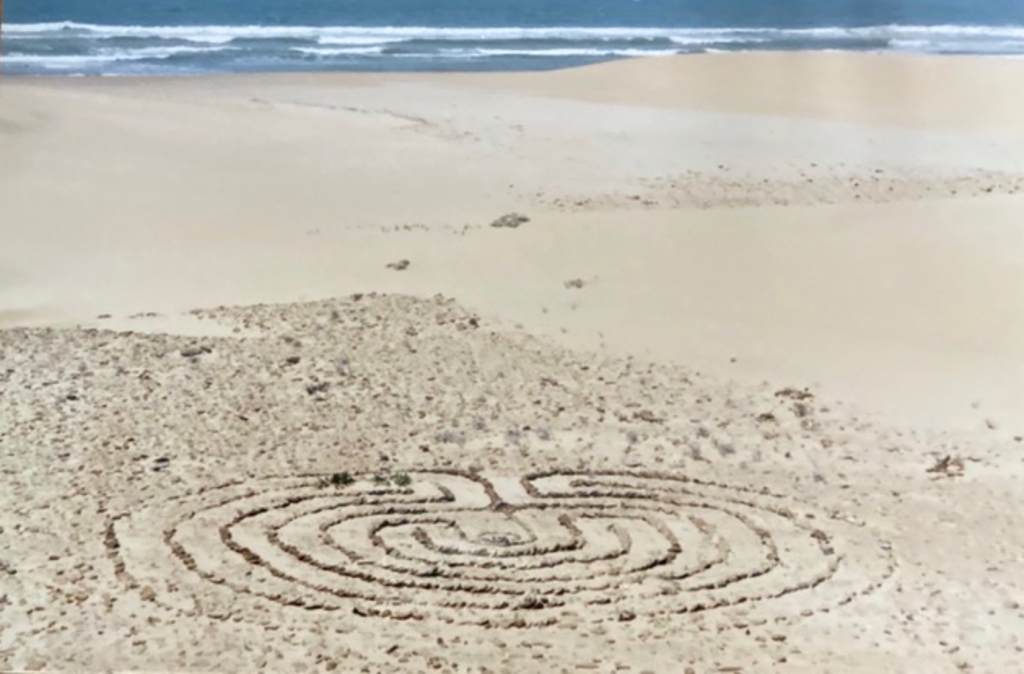
The most memorable work was the labyrinth made by my friend and artist, Cheryl Lauer. She spent every day lugging stones until, by the end of the week, working in hot sun, she had created her work.
The original work can be seen in the first image in the series below.
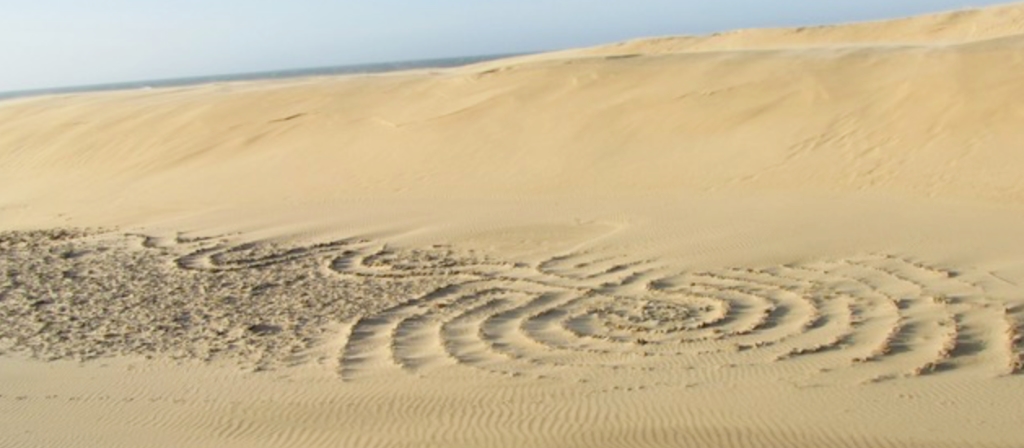
At the time we had no understanding of the dune fields, either their physics or their importance. The labyrinth was soon covered with sand and over time we thought it had vanished forever.
In the article, the authors used satellite images to measure dune movement between 2016 and 2020. It turns out that transverse dunes move from 7.6m to 11.1m per year on the Indian Ocean coast of South Africa. The most significant dune fields are between Gqeberha and Kaysers Beach and include our own section from Fish River to Kaysers Beach.
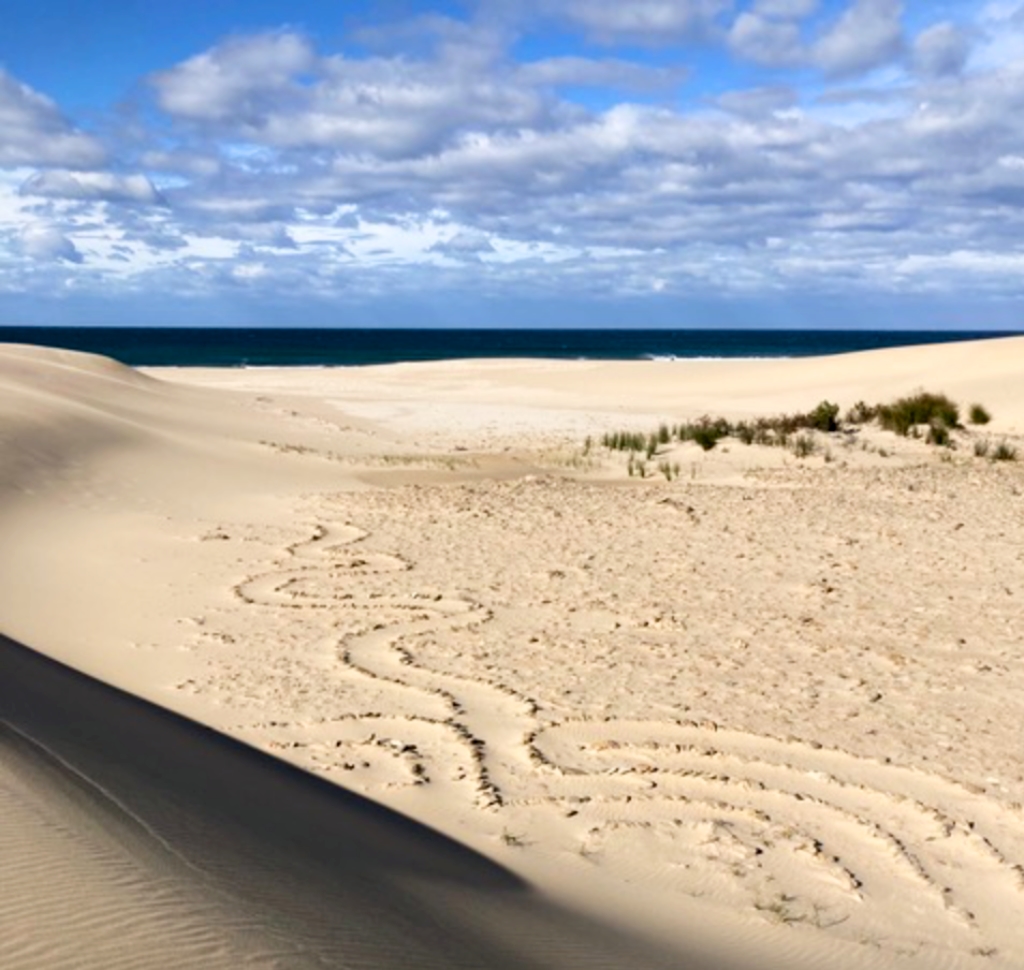
The images on this page were taken when the labyrinth was first made in 2001 and then again in 2013 and 2016 – and it has again appeared in 2024
No careful observation was ever made of how long it stayed invisible and how long it was present. But hopefully, now in 2024, we will start to document its full appearance and disappearance.
Click on images below to enlarge

THE ART OF RUNNING
Lauer’s labyrinth is the second major land-art work in Hamburg. The other work consists of patterns in the dunes made by the running footprints of Vuyisile Funda over a 6-year period until he became too ill to run. These, too, are exceptional examples of land art.
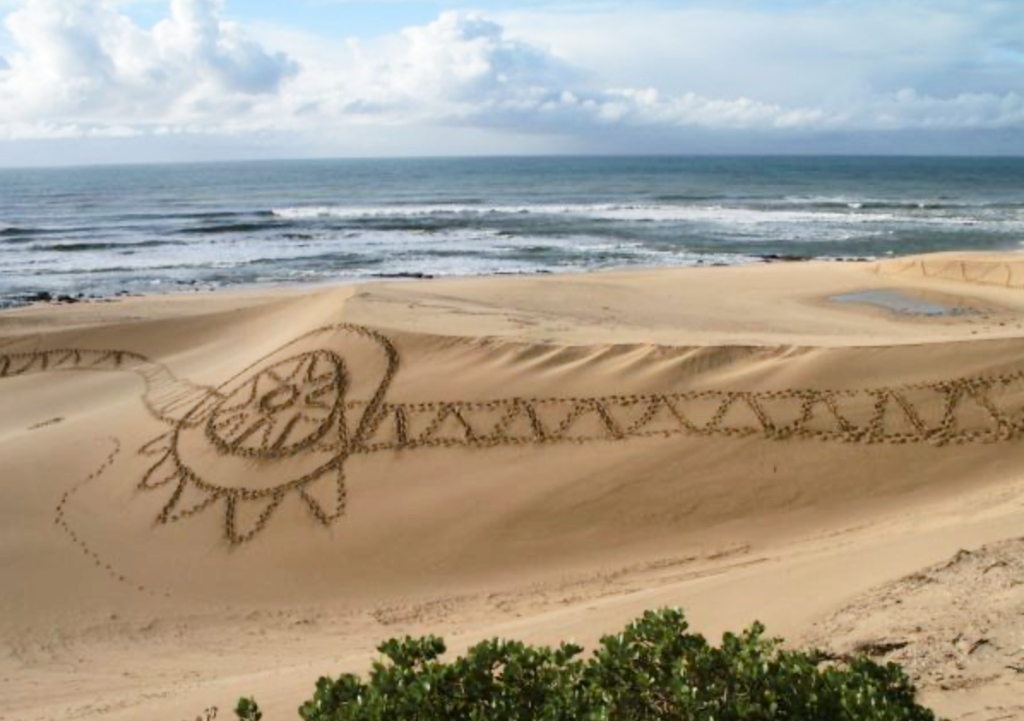
Watch this video of Vuyisile creating his land art.